Daily Briefing | 2026-09-11: Oil Prices Breaking 100 Force Global Reassessment of Interest Rate Path

Machine-translated with NiuTrans. Read the Chinese original.
Today's main theme
The clearest common thread over the past 24 hours is that energy shocks are redefining global policy and asset pricing. Following the escalation of maritime conflicts in the Middle East, Brent crude oil rose above $100 again. Energy prices not only directly pushed up costs for businesses and residents, but also spread to financial markets through inflation expectations, bond yields, and central bank response functions. As a result, the European Central Bank continued to raise interest rates, and price pressures on the US producer side also increased significantly. At the same time, the AI industry has not stopped capital and product expansion due to rising interest rates, and OpenAI has further pushed large models into the core workflow of financial institutions. China, within the framework of building a strong financial nation during the 15th Five-Year Plan period, simultaneously emphasizes serving the real economy, replenishing capital, and preventing risks. Geopolitically, the Russia-Ukraine conflict continues to push logistics, energy, and industrial infrastructure to the forefront, meaning that the market is no longer facing a single oil price shock, but a simultaneous reassessment of growth, inflation, and risk premiums.
Five key news items
1. Maritime conflicts in the Middle East escalate, with Brent crude holding above $100.
On September 10, energy transportation risks in the Middle East further increased. Reuters reports that Iran says it has attacked 10 ships near the Strait of Hormuz after the United States sank five Iranian oil tankers, as land and air strikes by both sides continue to spill over into maritime shipping lanes. Brent crude oil was still around $100.50 a barrel at one point that day. Although it has fallen from its intraday high, it has risen by nearly 30% since its low in early August. The key to this round of gains is not just crude oil production, but the market's beginning to reprice tankers, insurance, detours, and the risks of potential strait blockades. For importing countries, high oil prices will widen the trade deficit and drive up transportation and manufacturing costs; For central banks, this means that even if core inflation slows down, it may be pushed back up by the secondary transmission of energy. Going forward, it is necessary to focus on observing the volume of shipping in Hormuz, tanker insurance rates, whether Saudi Arabia and other oil-producing countries will increase supply, and whether a new ceasefire or maritime de-escalation mechanism has emerged between the US and Iran.Source: Reuters
2. The European Central Bank raised interest rates by another 25 basis points, as energy shocks further compressed the space for easing.
On September 10, the European Central Bank announced that it would raise all three policy rates by 25 basis points: the deposit facility rate to 2.50%, the main refinancing rate to 2.65%, and the marginal lending rate to 2.90%, effective September 16. This is the second time the European Central Bank has raised interest rates this year. The core background to the latest decision is that rising oil and gas prices brought about by the Middle East conflict have pushed Eurozone inflation back significantly above the 2% target. Although wages and some core price indicators have shown signs of cooling, winter energy demand, natural gas inventories, and geopolitical risks may still keep inflation sustained for longer. The European Central Bank also raised its 2026 economic growth forecast to around 0.9%, indicating that this is not a typical recessionary tightening. The market implies that expectations of "higher and longer" interest rates in Europe have strengthened, and bond maturity premiums and financing costs in highly indebted member states may continue to rise. The focus of future observation will be on Eurozone energy prices, wage growth, core services inflation, and whether the central bank indicates that further interest rate hikes are still needed.Source: ECB Reuters
3. OpenAI launches financial services version of ChatGPT, integrating large-scale models into investment banking and research processes.
On September 10, OpenAI launched ChatGPT for Financial Services, targeting the Financial Services industry and focusing on investment banking, stock research, and institutional data analysis. Reuters reports that the product was jointly developed with institutions such as Morgan Stanley and Evercore, and integrates financial data sources such as LSEG, PitchBook, and Daloopa. It also plans to expand data permissions and login systems through partners such as FactSet, S&P Global, Preqin, and Datasite. The product emphasizes GPT-6 Astra-based retrieval, financial reasoning, and traceable citations, which can be used for research, model building, customer materials, and internal corporate template workflows, and provides compliance capabilities such as role permissions, encryption, and audit logs. Its importance lies in the fact that the AI competition is shifting from a general chat experience to a high-value, highly regulated professional software market, and financial institutions' focus on purchasing AI is also shifting from "whether the model is smart" to data authorization, auditing, permissions, and error liability. Going forward, we need to observe the actual paid penetration rate, the boundaries with traditional Bloomberg/FactSet-type terminals, and regulatory requirements for automatically generated research and models.Source: Reuters OpenAI
4. China has clearly defined its path to becoming a financial powerhouse during the 15th Five-Year Plan period, with capital replenishment and serving the real economy going hand in hand.
On September 10, the State Council Information Office held a press conference on the implementation of the "15th Five-Year Plan" in the financial sector, where the People's Bank of China, the State Financial Regulatory Commission, the China Securities Regulatory Commission, and the State Administration of Foreign Exchange jointly introduced the key policies for the next stage. Lu Lei, Vice Governor of the People's Bank of China, stated that the institutional system and policy tools for the "five major tasks" of science and technology finance, green finance, inclusive finance, pension finance, and digital finance will be further improved. According to the State Financial Regulatory Commission, at the end of 2025, the capital adequacy ratio of commercial banks will be 15.46%, the provision coverage ratio will be 205.21%, and the average comprehensive solvency adequacy ratio of insurance companies will be 181.1%. Following the replenishment of 520 billion yuan in capital by major state-owned banks last year, eight central financial enterprises have recently increased their capital by 360 billion yuan. The policy signal is very clear: while maintaining the soundness of the financial system, we will improve credit and risk absorption capacity through capital replenishment, and then direct more funds to the real economy and structural transformation. The market should pay close attention to the pace of credit expansion after capital injection, local and real estate risk management, capital market reform, as well as cross-border use of RMB and foreign exchange market stability arrangements.Source: Press Conference of the China Securities Regulatory Commission/State Council Information Office
5. Russian military expands strikes on Ukraine's logistics and industrial nodes, raising risks to economic infrastructure.
On September 10, Russia launched a new round of drone, artillery, and airstrikes against multiple parts of Ukraine, with the attacks further focusing on logistics, energy, and industrial infrastructure. Reuters reports that Pavlokhrad, a major industrial and railway hub in southeastern Ukraine, was attacked by multiple weapons, resulting in 7 deaths and 76 injuries. A Ukrnafta gas station in Kyiv was hit by a jet drone, injuring four people. A sunflower oil facility belonging to the American company Bunge in Dnipro was also attacked, resulting in 2 deaths and 5 injuries. For the market, such attacks have more economic spillover effects than simply advancing on the front lines, as they directly affect the railway, fuel, agricultural processing, and export supply chains, and increase the insurance and operating costs of Western companies' assets in Ukraine. If both sides continue to retaliate against economic facilities, the risk premium for grain, cooking oil, energy, and regional logistics in the Black Sea could rise again. Going forward, it remains to be seen whether Ukraine's air defense ammunition supply, Western support for the protection of critical infrastructure, and whether Russia and Ukraine will continue to expand their long-range strikes against each other's economic assets need to be observed.Source: Reuters
Market Correlation and Today's Observation
The most important variable in the market today remains the "oil price-inflation-interest rate" chain. After Brent crude oil stabilized above $100, the energy shock has spread from commodity markets to production costs and bond markets in Europe and the United States. The U.S. PPI rose 0.4% month-on-month and 5.4% year-on-year in August, while energy prices rose 4.2% that month, leading the market to renew bets on a Federal Reserve rate hike and putting continued upward pressure on U.S. long-term yields.Reuters The European Central Bank has taken the lead in raising interest rates, indicating that major central banks will prioritize preventing energy shocks from solidifying into broader inflation while growth remains resilient.
At the exchange rate level, high oil prices usually benefit the currencies of energy-exporting countries, but they can suppress economies that rely on imported energy. The performance of the yen, euro, and Asian currencies will depend more on whether their central banks are willing to tighten in tandem. In terms of commodities, crude oil remains the center of risk pricing, while gold may not simply benefit, as higher real interest rates will offset some safe-haven demand. Technology stocks face two opposing forces: the commercialization of AI continues to accelerate, supporting earnings expectations, but rising risk-free rates will compress forward cash flow valuations. OpenAI's entry into financial services and Nvidia's continued expansion of infrastructure indicate that the AI investment cycle is not over, but the market will be more demanding of revenue realization. In China, capital replenishment in the financial system and the "five major tasks" will help stabilize credit supply. However, if global energy and interest rates remain high, policies still need to maintain a balance between the RMB exchange rate, domestic demand, and industrial upgrading. Today, we will continue to observe whether the Hormuz shipping industry, European and American bond yields, the US dollar index, and crude oil have effectively broken through previous highs, as well as whether more specific credit and capital market tools will emerge following China's financial policies.
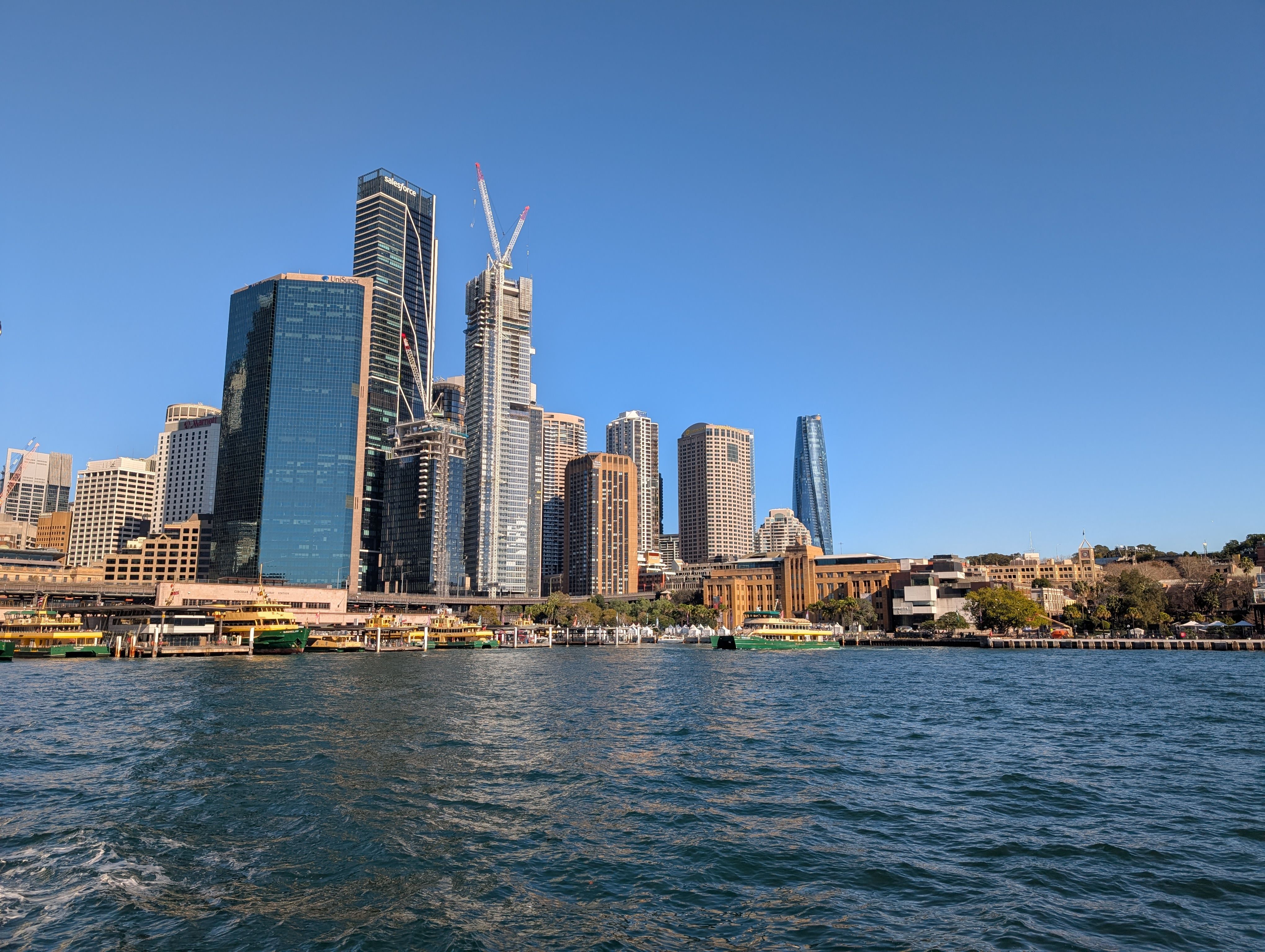
Cover image:Chris Andrawes / Unsplash
- Title: Daily Briefing | 2026-09-11: Oil Prices Breaking 100 Force Global Reassessment of Interest Rate Path
- Author: AdenXie
- Created at : 2026-09-11 09:03:00
- Link: https://blog.adenxie.com.cn/2026/09/11/2026-09-11-daily-brief/
- License: All Rights Reserved © AdenXie