ECON3116 What We Learned from International Trade Theory and Policy: A Complete Review Note on From Comparative Advantage to Trade Policy

Machine-translated with NiuTrans. Read the Chinese original.
The English course name of ECON3116 is International Trade Theory and PolicyThat is, international trade theory and policy. This course doesn't just discuss "why countries exchange goods," but revolves around a complete economic theme: why different countries, industries, and companies form different trade patterns. How open trade can expand production and consumption possibilities; Why aren't trade gains automatically distributed equally domestically? And how prices, income distribution, and overall welfare change when governments use tariffs, quotas, subsidies, and trade agreements.
After completely organizing the Lectures, tutorials, Quick quizzes, formula lists, and calculation problems, I understood the entire course as a four-layer interconnected framework: the first layer is...Source of tradeThis includes productivity differences, factor endowment differences, and economies of scale; The second layer isTrade resultsThis includes specialization, relative prices, income distribution, and welfare; The third layer isEnterprise and market structureExplain product differentiation, heterogeneous enterprises, exports, and FDI; The fourth layer isTrade Policy and SystemExplain protectionism, political incentives, the WTO, and preferential trade agreements.
I. Main Theme of the Course: Sources, Benefits, Distribution, and Policies of Trade
International trade models each emphasize different sources of difference. The Ricardian model focuses on labor productivity; The Specific Factors model distinguishes between short-term industry-specific Factors and mobile labor; The Heckscher–Ohlin model explains relative factor endowment; Economies of scale and monopolistic competition illustrate that trade can occur even when countries are very similar; The heterogeneous enterprise model further explains why not all enterprises will export or become multinational corporations.
The latter part of trade policy incorporates market outcomes into government decisions: whether tariffs can improve terms of trade, who receives quota rents, why protectionism persists politically, and when trade agreements create trade and when they divert it.
When faced with new questions, I think the most useful thing is to ask four questions in sequence:
- Who has a lower opportunity cost or unit cost? This determines comparative advantage, export direction, and business survival.
- Which relative price has changed? This determines production, consumption, factor rewards, and trade volume.
- Who was transferred, and who bore the distortion? This determines the welfare breakdown of tariffs, quotas, and subsidies.
- What are the key assumptions of the model? For example, can small countries influence world prices, whether factors of production flow, whether companies have market power, and who receives quota rent.
Explanatory questions can use a very stable English framework:
Define the model or concept → state the relevant price or cost change → explain the economic mechanism → identify the implication for trade, welfare, or income distribution.
That is:Define the model - locate the change - explain the mechanism - give the results。
II. Where does trade come from: Comparative advantages between Gravity Model and Ricardian
1. Gravity Model: Let's look at the product relationship first.
The Gravity Model illustrates that bilateral trade typically increases as the economies of both countries grow and decreases as geographical distance or trade frictions rise. Keeping all other conditions unchanged, the core relationship can be written as:
If both countries' GDPs double, trade volume will not double, but rather quadruple.
These types of questions test product relationships, not claims that real trade must increase exactly fourfold. The Gravity Model describes trade volume and partner distribution, while the Ricardian Model explains why a certain good is exported by a certain country; the two are not interchangeable.
2. Comparative advantage does not equal absolute advantage
The Ricardian model takes labor as the sole factor of production, and national differences arise from labor productivity or unit labor demand. Order the production of one unit of goods
In perfect competition:
So in a self-sufficient equilibrium where both products are produced:
A country exports goods that have a lower opportunity cost. The key is not which country "produces more" of either commodity, but which gives up less of the other commodity in order to produce one more unit of the commodity. Absolute advantage influences living standards and wage levels, while comparative advantage determines the direction of specialization.
If Home
$$
\left(\frac{P_X}{P_Y}\right){Home}
<
\left(\frac{P_X}{P_Y}\right){trade}
<
\left(\frac{P_X}{P_Y}\right)_{Foreign}.
$$
If the question is changed to "1 unit"
III. Trade Gains Do Not Equal Benefits for Everyone: Specific Factors and H–O
1. Specific Factors: Short-term industry distribution effect
Specific Factors, also known as the Ricardo–Viner model, typically have two departments. Labor can move across sectors, while capital or land is dedicated to specific industries. Under equilibrium competition, the wages of mobile workers satisfy:
If the relative price of manufactured goods
Workers' actual wages, measured by different commodities, vary, making overall welfare uncertain. Special factors in the export sector are determined to benefit, while special factors in the import competition sector are determined to suffer.
This difference from H–O is very important: Specific Factors is a short-term model with industry-specific elements; H–O is closer to a long-term adjustment, as both factors can be allocated across sectors, so the conclusion about the actual income of abundant and scarce factors is stronger.
2. Heckscher–Ohlin: Relative factor endowments shape trade
The H–O model assumes that countries have the same technologies and preferences, but different relative factor endowments; Commodities are produced using different factor intensities. The abundance of factors is compared by the ratio of countries, for example
The H–O theorem can be summarized as follows: a country exports goods that intensively use its relatively abundant factors, and imports goods that intensively use its relatively scarce factors. If Home is relatively labor-intensive and Cloth is relatively labor-intensive, Home will export Cloth and import capital-intensive goods.
This module also has three closely related conclusions:
- Stolper–Samuelson theoremAn increase in the relative price of a commodity will increase the real return of the commodity's intensively used factors, measured in terms of two commodities, and reduce the real return of the other factor.
- Rybczynski theoremWhen commodity prices remain constant, an increase in one factor will increase the output of goods that intensively use that factor, while the output of another will absolutely decrease.
- Factor Price EqualizationUnder strict conditions such as the same technology, the two countries producing the same goods, and very low trade costs, the convergence of commodity prices will lead to the convergence of actual returns on factors of production. Realistic technological differences, trade costs, and specialization can weaken this prediction.
3. Two sets of equations in the H–O numerical problem
Tutorial's fixed input coefficient questions typically require both output and factor prices. If the unit capital and labor input of Cars and T-shirts are respectively
for example
Thus obtained
Given the product price, the factor price comes from the zero-profit condition:
If
So
IV. Standard Trade Model: Terms of Trade, Growth, and General Equilibrium
The standard trade model connects production and consumption using PPF, the no-difference curve, and the trade budget line. If domestic exports
Improved terms of trade mean that the same amount of exports can be exchanged for more imports, thus tending to improve domestic welfare. After opening up trade, production points may still be located on the PPF, while consumption points may be outside the country's PPF. Exports and imports are not equal in physical quantity, but in value:
Growth does not necessarily improve welfare unconditionally. If growth is clearly biased towards exports, the relative global supply will increase, and the relative price tendency of exports will decrease:
Therefore, export-biased growth usually worsens domestic terms of trade. In extreme cases, relative price losses may even offset the expansion of production capacity; this is the logic of impoverished growth. When answering the questions, you should analyze "PPF outward expansion" and "changes in international relative prices" separately.
V. Economies of Scale and Imperfect Competition: Similar Countries Also Trade
1. Internal economies of scale and linear demand
If the total cost of the enterprise is:
Then the average cost is:
When fixed costs are allocated to a larger output, the average cost decreases. on account of
The linear requirements in the handout are set to:
among
Free entry results in zero economic profit, i.e.
Market consolidation
2. Constant elasticity requirements: Do not mix with linear models.
The Tutorial also uses constant elastic requirements:
Here we need to distinguish between three sets of environments: perfect competition is...
VI. Enterprise Heterogeneity, Exports, and FDI
The heterogeneous enterprise model classifies enterprises in an industry according to marginal cost.
Or:
Therefore, exporters are the lower-cost, more productive subset of surviving enterprises. Trade opening enables low-cost enterprises to expand and export, while high-cost enterprises contract or exit, and average industry productivity increases due to resource reallocation.
Horizontal FDI is when companies replicate their production processes overseas to reach consumers; its core is... proximity–concentration trade-offWhen trade costs are high, proximity to the market is more attractive; When economies of scale are strong and overseas factories have high fixed costs, exports after concentrated production are more attractive. If overseas sales are
Vertical FDI, on the other hand, moves part of the value chain to countries with lower production costs, primarily driven by wages, input costs, and comparative advantages. A company's ownership of an overseas institution falls under the category of offshoring/FDI; Entrusting production to an independent foreign company is considered foreign outsourcing.
Exports versus FDI numerical framework
If foreign market demand is
Order
$$
Q^=\frac{A-MC}{2},\qquad P^=\frac{A+MC}{2}.
$$
FDI under
under the exit
$$
Q^_{exp}=40-\frac{t}{2},\qquad P^_{exp}=60+\frac{t}{2},
$$
The maximized profit can be obtained within the relevant range.
VII. Trade Policy: Set prices first, then calculate quantity and benefits.
1. Tariffs between small and large countries
Home's import demand and Foreign's export supply are:
$$
XS(P^)=S^(P^)-D^(P^*).
$$
Free trade equilibrium satisfaction
Domestic supply increased, demand decreased, and imports decreased. Consumer surplus declined, producer surplus increased, and the government obtained...
Small countries have no terms-of-trade benefits, so net welfare is bound to decline.
Major countries must differentiate between tariffs paid by their own consumers.
If
The welfare changes of major country tariffs are:
It may be positive, but it does not mean that a trade war is beneficial: trading partners may retaliate, and the optimal tariff conclusion is highly dependent on the country's actual market power.
2. Quotas, export subsidies and dumping
Import quotas are binding only if they are below the free trade import volume:
The post-quota price is determined by the following formula:
Equivalent tariffs and quota rents are:
Quotas and equivalent tariffs can produce the same prices, quantities, and distortions, but the benefits depend on rent vesting. When a government auction license or domestic license holder receives rent, the domestic benefit may be the same as the equivalent tariff; If a foreign exporter obtains a license or receives rent under the VER, the country will lose this portion of its revenue.
Export subsidies raise domestic prices and production, harm consumers, and incur government expenses; Major powers will also experience deteriorating terms of trade due to falling world export prices. Dumping relies on imperfect competition and market segmentation, with companies' net landed prices in export markets being lower than their domestic prices. Anti-dumping duties may also become protectionist tools in practice.
VIII. Political Economy, WTO and Preferential Trade Agreements
The net loss of tariffs in small countries is still widespread, and the reason cannot be explained by efficiency models alone. The protection benefits of importing competing producers are highly concentrated, while the losses of consumers are dispersed among many people. Therefore, the former has more incentive to organize lobbying:
Import-competing producers are more likely to lobby for protection because their gains are concentrated, whereas consumers’ losses are dispersed.
The Protection for Sale model further integrates campaign contributions and social welfare into government objectives, predicting that organized industries are more likely to be protected. It does not assume that the government is completely indifferent to social welfare, but rather gives extra weight to organized interests.
The WTO and multilateral negotiations reduce retaliatory trade wars by lowering tariffs, constraining future tariff increases, addressing non-tariff barriers, and providing dispute settlement mechanisms. Countries may prefer protection when acting alone, but protecting each other can make both sides worse off than common free trade, and enforceable agreements can alleviate this prisoner's dilemma.
The benefits of preferential trade agreements should be distinguished:
- Trade creationReal resource costs have decreased due to a shift from higher-cost domestic production to lower-cost imports from member countries.
- Trade diversionShifting from the lowest-cost non-member country to a member country that appears cheaper due to zero tariffs but has higher actual costs may result in a decline in benefits.
For example, non-member C has a cost of 4 and member B has a cost of 6. Before the agreement, both bear a tariff of 3, and the country imports from C, which has a CIF price of 7. After the agreement, only B was exempted from taxes, and the source of imports was changed to B at a price of 6. Consumers pay 1 less per unit, but the government loses the original 3 tariff per unit; the net change is...
IX. The most effective methods and typical mistakes in review
The most effective way to organize this course is not to reread the PPT continuously, but to compress each model into a small loop of "recognizing words - core equations - directional conclusions - a similar problem".
For example, the H–O numerical problem first uses the full employment equation to calculate output, and then uses the zero profit equation to calculate...
Several typical errors occurred during the review process:
- The proportional relationship only changes onceThe simultaneous doubling of the GDP of both countries was mistakenly interpreted as a doubling of trade; instead, the product was used to expand the result to four times.
- H–O equation algebraic errorThe conditions for full employment are written correctly, but the result after elimination is incorrect; The answer can only be confirmed after subtracting item by item and returning the resource constraint.
- put
- Exports and FDI were not optimized separately.Transportation costs change the optimal price and sales volume for exports, so maximized profits must be compared.
- Major powers only seek one price for tariffs.: Must use
- Quota rents are confused with government revenueFirst, indicate the ownership of the license, and then determine the welfare of the country.
These errors can be further divided into four categories: concept recognition, equation setting, algebraic calculation, and economic interpretation. You don't need to reread the entire chapter each time you get a wrong question; simply identify the error category and complete a similar question immediately. For graphics questions, you should also mark them first.
After completing the numerical questions, perform at least two backtests. First, the substitution equation: H–O production must be exactly used up.
10. Formula List and Examination Room Identification Framework
| question clue | What to write first | Key Conclusions |
|---|---|---|
| Unit labor demand, two countries, two products | Low opportunity cost exports | |
| Specific capital or land, labor can be moved | Export sector benefits from special factors, labor uncertainty | |
| Two sets of equations: full employment and zero profit | H–O、S–S、Rybczynski | |
| PPF, export prices, growth bias | Export bias towards growth usually worsens ToT | |
| Fixed costs, variety, number of enterprises | Economies of scale, zero profit and increase in variety | |
| Linear inverse demand, export or factory construction | High trade costs relative to fixed costs drive FDI | |
| Supply and demand, tariffs | $MD=D-S,XS=S^-D^$ | Small countries have no ToT benefits, while large countries use dual pricing. |
| Import limit, license | Rental Vesting Determination Quota Benefits | |
| PTA, Member and Non-Member Costs | Comparison of true sources before and after the agreement | creation improves efficiency, diversion may result in losses. |
In the exam room, the multiple-choice questions should first identify "short-term Specific Factors or long-term H-O", "small country or large country", "linear demand or constantly elastic demand", and "who should receive the quota rent". For calculation problems, first define variables, write equations, substitute numbers, and finally explain the economic meaning in one sentence. The choice of model often determines the answer more than the arithmetic itself.
XI. Conclusion: Treating trade theory as an analytical language
The most worthwhile takeaway from ECON3116 is not memorizing a single tariff area formula, but a transferable analytical sequence: first look for cost or endowment differences, then observe how relative prices are transmitted to production, consumption, and factor returns, and finally distinguish between real efficiency changes, income transfers, and unnecessary losses.
Comparative advantage explains why trade can be mutually beneficial; Specific Factors and H–O explain who will support or oppose trade; Economies of scale, heterogeneous firms, and FDI describe firm-level adjustments; Trade policy and political economy remind us that efficiency conclusions do not automatically translate into policy choices.
Only by placing formulas under model assumptions, graphs after price changes, and welfare judgments within the decomposition of transfer and distortion can we stably reconstruct answers in unfamiliar situations, rather than relying solely on memory for a particular question.
This article is based on ECON3116's Week 1–10 Lectures, Week 2–10 Tutorial Questions and Answers, Quick Quiz, final exam instructions, list of in-project formulas, and complete review process. The symbols, question data, and assessment arrangements may change in different semesters. Please refer to the current course materials for the most accurate information.
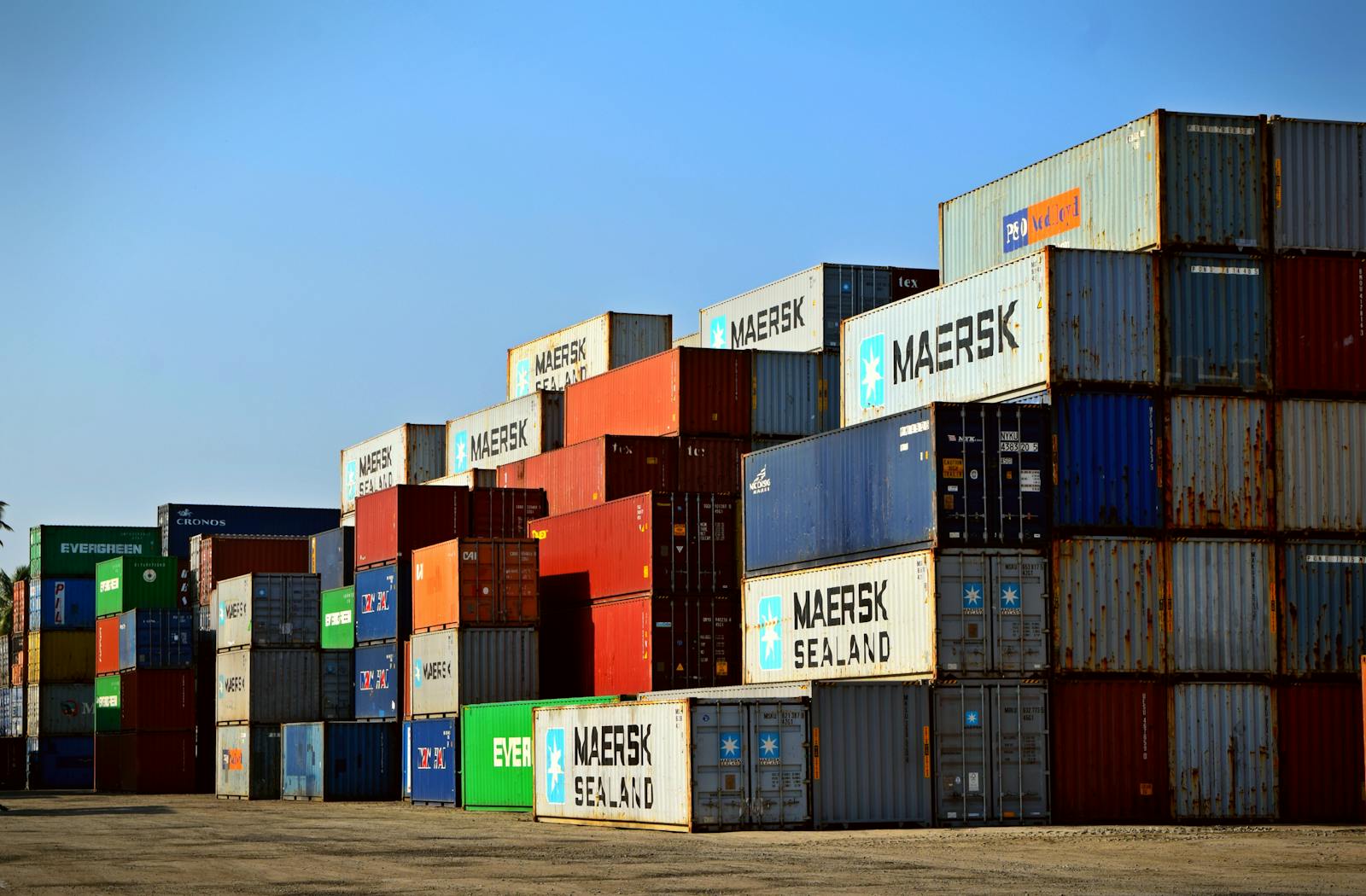
Cover image:Pexels
- Title: ECON3116 What We Learned from International Trade Theory and Policy: A Complete Review Note on From Comparative Advantage to Trade Policy
- Author: AdenXie
- Created at : 2026-08-28 21:18:00
- Link: https://blog.adenxie.com.cn/2026/08/28/2026-08-28-econ3116-international-trade-review/
- License: All Rights Reserved © AdenXie