Daily Briefing | August 31, 2026: Tensions Rise Again in Hormuz, Global Funds Reassess Risks

Machine-translated with NiuTrans. Read the Chinese original.
Today's main theme
Entering Monday's Asian trading session, global markets once again faced the same question: how high valuations risk assets can withstand when geopolitical conflicts, energy prices, and high interest rates coexist. Following the US strikes on Iranian Larak Island targets, the Strait of Hormuz once again became the market pricing center, with Brent crude oil briefly breaking through $90 in early Asian trading. Meanwhile, U.S. Treasury Secretary Besant is about to face multiple pressures at the G20: trade frictions, Iran sanctions, and rising long-term U.S. Treasury yields. Another "valuation risk" has emerged in the AI field: large technology companies recognized huge book gains in the latest quarter due to their holdings of equity in other AI companies. In China, PetroChina's half-year profit was boosted by high oil prices, but refined oil sales weakened, reflecting uneven domestic demand. Overall, today is not driven by a single event, but by a round of risk reassessment driven by energy, financing costs, technology valuations, and Chinese demand.
Five key news items
1. US military attacks Iranian targets again, Hormuz risk premium returns to oil prices
U.S. officials confirmed on August 30 that the U.S. military struck two launchers on Iran's Larak Island that day, marking the first known U.S. military strike against Iran since the end of July. The U.S. stated that Iranian Revolutionary Guard personnel were preparing to use these devices to launch sea mines into the Strait of Hormuz. The Iranian Revolutionary Guard said the attack caused deaths and injuries to soldiers and civilians, and said it would respond. This location is particularly sensitive because Larak Island is close to one of the world's most critical oil and gas shipping lanes. After about six months of war in Iran, navigation capacity in the strait has not yet fully recovered, leading the market to directly map any new military action to the probability of supply disruptions.
Prices reacted quickly: Brent crude rose about 2.5% to $90.32 a barrel in early Asian trading on Monday, while WTI rose about 2.4% to $85.41. For the global economy, what really matters is not the daily increase, but that energy prices have once again become an inflation variable. If oil prices remain around $90 for longer, the room for the Federal Reserve and other central banks to cut interest rates will be further limited, and costs in industries such as transportation, chemicals, and aviation will rise again. Next, it remains to be seen whether Iran will retaliate militarily, whether the risk of laying mines in the strait will increase, and whether major oil-producing countries can offset the risk premium by increasing production.Reuters: US military strikes|Reuters: Oil price reaction
2. The G20 Finance Ministers' Meeting is approaching: Tariffs, Iran, and high debt costs are squeezed onto the same agenda.
U.S. Treasury Secretary Scott Bessent will coordinate a highly difficult policy matter at the G20 finance ministers' meeting in Asheville, North Carolina. The United States hopes to simultaneously promote a narrowing of global trade imbalances and increased growth, while also demanding that more economies reduce their business ties with Iran; However, other members are more concerned about the reimposition of tariffs by the United States, China's export growth, and rising global financing costs. Reuters points out that the U.S. federal debt has exceeded $40 trillion, long-term Treasury yields have risen to their highest level in about 19 years, and the U.S. Treasury Department has recently eased market pressure by expanding bond repurchases and other measures.
This means that the G20 debate has shifted from the traditional "growth or inflation" to a more complex combination: trade barriers affect supply chains and prices, the war in Iran pushes up energy costs, and high debt raises government financing costs. For investors, US Treasury yields are the benchmark for global asset pricing. If long-term yields remain high, technology stocks, real estate, and emerging markets will all face valuation discount pressure. The most noteworthy aspects of the meeting are whether the United States can reach a broader consensus among major economies on sanctions against Iran, and whether countries will publicly oppose tariff escalation and the excessive use of financial sanctions.Reuters
3. AI boom enters the "profit statement": Four tech giants recognize over $160 billion in gains from equity investments.
The Financial Times reported on August 30 that Alphabet, Amazon, Nvidia, and Microsoft collectively recognized more than $160 billion in gains in the latest quarter from the increase in the value of their holdings in other AI companies. Unlike selling cloud services, GPUs, or software subscriptions, these revenues mainly go into items such as "other income," which comes from rising valuations of the AI companies invested in, rather than cash flow directly generated by the core business. With the listing of highly valued technology assets such as SpaceX and rising expectations for capital operations by companies like Anthropic and OpenAI, cross-shareholdings among tech giants are increasingly impacting financial statements.
The importance of this event lies in the fact that the AI market not only raises expectations for the main business, but also further amplifies the book profits of listed companies through private equity valuations. This structure makes earnings appear stronger when the market is rising; However, if the valuation of AI private equity funds corrects, the book returns may also reverse. Therefore, investors need to consider operating profit and investment revaluation separately. Short-term concerns include the pace of financing and IPOs for several AI companies, accounting valuation methods, and whether large tech companies will continue to expand their equity investments in ecosystem partners.Financial Times
4. PetroChina's profits increased by 22% in the first half of the year, but weaker refined oil sales exposed diverging demand.
China National Petroleum Corporation (CNPC) released its first-half results, showing that net profit increased by approximately 22% year-on-year, with high oil prices and the performance of upstream businesses being the main supports. At the same time, the company's refined oil sales declined, reflecting that domestic fuel demand in China remains weak. For an energy giant covering the entire exploration, refining and sales chain, this combination of "rising profits and weak end-user sales" is quite representative: external geopolitical conflicts pushing up crude oil prices can improve upstream profitability, but it does not mean that residents' travel, logistics and industrial activities will strengthen simultaneously.
From a macro perspective, this is consistent with the current uneven demand recovery in China. Energy companies' profits may improve due to price factors, but if end consumption and industrial oil use recover to a limited extent, the refining, chemical and sales sectors will still be under pressure. High oil prices may also affect downstream companies' profits through transportation and chemical costs, so China's policy task of stabilizing domestic demand will not be alleviated by the profit growth of large energy companies. Next, we should observe whether domestic gasoline and diesel demand, refinery operating rates, and rising international oil prices in the third quarter will be further transmitted to domestic production costs.Reuters
5. *travels to Bishkek to attend the SCO summit, marking China's strengthening of its diplomatic layout in Eurasia and the Middle East.
Chinese President*left Beijing on August 30 for Bishkek, Kyrgyzstan, to attend the 2026 Shanghai Cooperation Organisation Summit and will also pay state visits to Kyrgyzstan and Egypt. This year marks the 25th anniversary of the founding of the Shanghai Cooperation Organisation (SCO), and the summit is expected to discuss issues such as regional security, economic and trade cooperation, and global governance. The timing of the trip itself is noteworthy: the Middle East conflict continues to drive up energy and shipping risks, the war between Russia and Ukraine continues, and the United States is pushing for more countries to cooperate with its policy toward Iran at the G20, making security and trade arrangements in Eurasia even more strategically significant.
For China, the Shanghai Cooperation Organisation (SCO) is not only a platform for security cooperation, but also connects Central Asia with energy, transportation, and Belt and Road projects. His subsequent visit to Egypt extended his diplomatic focus to the Red Sea, the Suez Canal, and the Middle East market. The most interesting things to watch in the short term are whether the summit will result in new trade, energy, or cross-border infrastructure arrangements, and what specific positions China will put forward on issues such as the Iranian war, regional security, and multilateral financial cooperation.Chinese government website|Ministry of Foreign Affairs
Market Correlation and Today's Observation
Today's news items can be understood within the same asset pricing framework. The first layer is energy: the US's renewed strikes on Iranian targets have boosted the risk premium in Hormuz, and rising oil prices will increase the tail risk of global inflation. The second layer is interest rates: if energy shocks extend the inflation cycle, and long-term U.S. Treasury yields remain high due to debt and maturity premiums, then the "risk-free rate" itself will continue to suppress overvalued assets. The third layer is technology: AI demand remains strong, but as tech giants' profits are increasingly affected by AI equity revaluations, the market will focus more on profit quality rather than just total growth.
The logic behind Chinese assets is slightly different. PetroChina benefited from international oil prices, but weak refined oil sales indicate that the recovery of domestic demand still requires policy support. If oil prices continue to rise, China, as a major energy importer, will also face trade conditions and corporate cost pressures. At the same time, the SCO summit and diplomacy in Central Asia and the Middle East help strengthen energy and trade corridors, but these long-term strategies cannot fully offset short-term price shocks. The most crucial variables for the market this week are whether the situation in Hormuz will escalate further, whether the G20 can reduce trade and sanctions uncertainty, and whether U.S. long-term yields will continue to rise. If all three deteriorate simultaneously, risky assets may experience a more significant valuation compression; If oil prices fall and diplomatic tensions ease, market attention will return to economic data and the realization of AI profits.
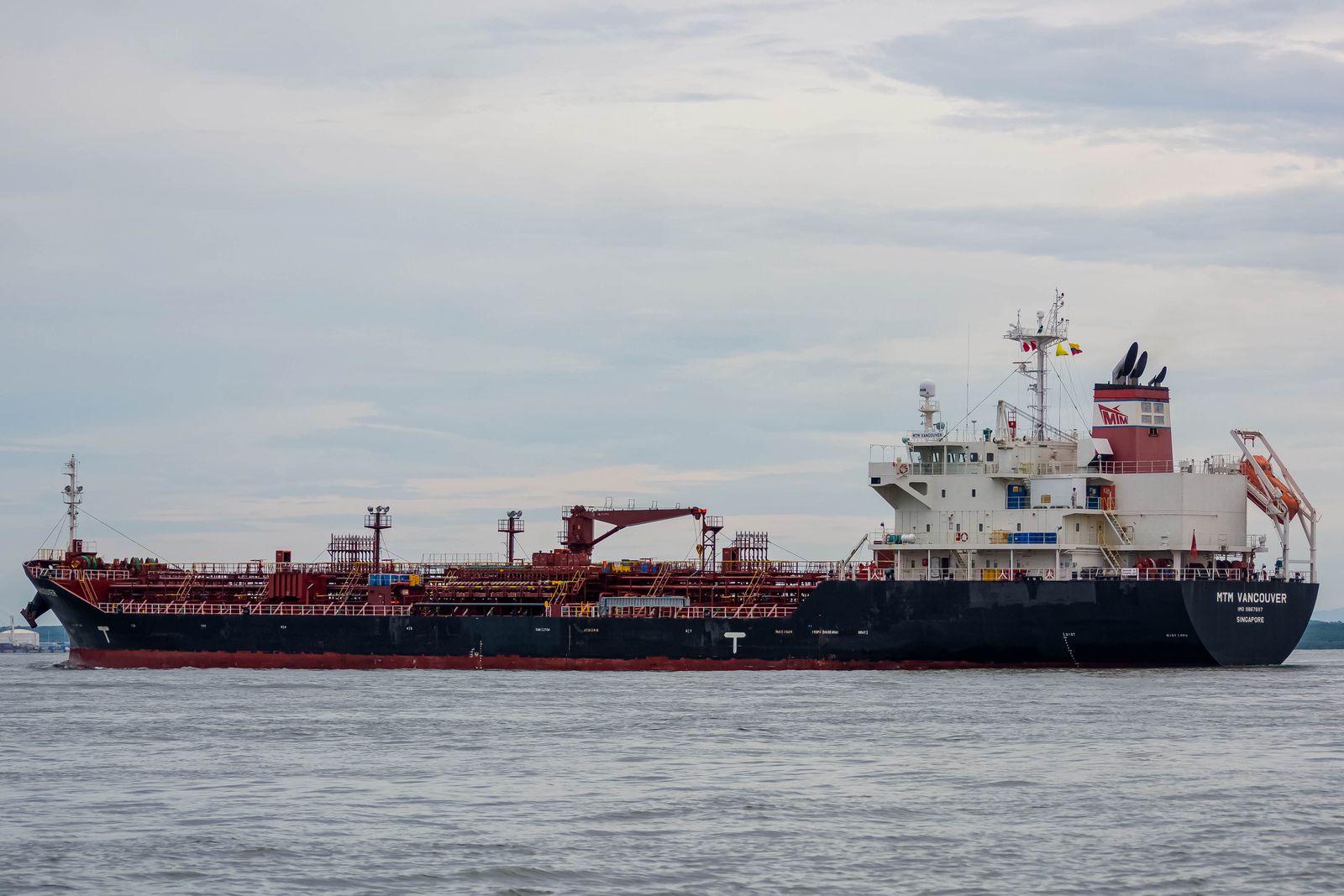
Cover photography :Luis Morales Torres / Pexels。 The image is an accompanying photo of an oil tanker at sea, not a live photo of the news event in this article.
- Title: Daily Briefing | August 31, 2026: Tensions Rise Again in Hormuz, Global Funds Reassess Risks
- Author: AdenXie
- Created at : 2026-08-31 09:00:00
- Link: https://blog.adenxie.com.cn/2026/08/31/2026-08-31-daily-brief/
- License: All Rights Reserved © AdenXie