Daily Briefing | 2026-10-19: Debt, AI and Energy Security Repricing Global Risks

Automatically translated. Read the Chinese original.
Today's main theme
The common thread over the past 24 hours is that the global economy's "resilience" increasingly relies on expensive and fragile buffers. After the IMF and World Bank Annual Meetings concluded, emerging economies still face high interest rates, debt service burdens, and declining aid, yet received no new systemic solutions; the AI industry is attempting to address the distribution of technological gains through equity arrangements. China plans to tighten export controls on advanced photovoltaic manufacturing technology, signaling that industrial policy is extending from capacity and price competition to control of critical processes. Meanwhile, Iran has linked the reopening of the Strait of Hormuz to sanctions, port blockades, and a regional ceasefire, while Egypt is seeking domestic authorization for possible support to Saudi Arabia. Capital markets therefore need to simultaneously assess financing costs, technology investment returns, energy corridors, and geopolitical conflict spillovers.
Key News
1. IMF and World Bank Annual Meetings Fail to Resolve Emerging Economies' Debt Predicament
After the IMF and World Bank Annual Meetings in Bangkok, developing economies have yet to secure concrete new solutions to address the Middle East war, the Ukraine war, high debt costs, and the divergence in AI investment. According to a Reuters report on October 18, these countries' average debt service has more than doubled from a decade ago, reaching 14% of government revenue and squeezing spending on education, healthcare, and other areas; their overall growth has also slowed from 4.4% to around 3.6%. IMF Managing Director Georgieva noted that fiscal imbalances in advanced economies are more severe, but rising global bond yields are transmitting financing pressure to low-income countries. The meeting's recommendations remain focused on deficit reduction, advancing reforms, and attracting private capital, without establishing new debt relief or risk-sharing mechanisms. Going forward, the key will be U.S. interest rates, official development assistance, sovereign debt refinancing, and whether private capital can truly flow into high-risk countries rather than only to projects with existing cash flows.Reuters reported on 18 OctoberThese countries' average debt service has more than doubled from a decade ago, reaching 14% of government revenue and squeezing spending on education, healthcare, and other areas; their overall growth has also slowed from 4.4% to around 3.6%. IMF Managing Director Georgieva noted that fiscal imbalances in advanced economies are more severe, but rising global bond yields are transmitting financing pressure to low-income countries. The meeting's recommendations remain focused on deficit reduction, advancing reforms, and attracting private capital, without establishing new debt relief or risk-sharing mechanisms. Going forward, the key will be U.S. interest rates, official development assistance, sovereign debt refinancing, and whether private capital can truly flow into high-risk countries rather than only to projects with existing cash flows.
2. Anthropic plans to contribute a 5 per cent stake to a public benefit fund
Anthropic announced that, pending shareholder approval, it plans to contribute 5% of the company's shares to a newly established public benefit fund; for every 50% increase in the company's valuation above an as-yet-undisclosed benchmark, the board may discretionarily add shares equivalent to 2% of the company. According to a Reuters report on October 18, the fund may be used for nonprofit grants, direct distributions to specific groups, and mitigating AI's impact on workers, and is explicitly prohibited from being used for lobbying or political contributions. Together with other public-purpose arrangements, approximately 20% of Anthropic's equity will be linked to its public mission. The move comes as the Claude developer prepares for a massive IPO, aiming to translate its "public benefit corporation" legal status into quantifiable asset commitments. However, the fund is wholly owned by the company, and its governance independence, valuation benchmark, beneficiary selection, and share disposal methods have not been disclosed. The key focus going forward is how the registration statement will handle conflicts between shareholder returns and public benefit obligations, and whether the fund can establish an auditable, sustainable distribution mechanism.Reuters reported on 18 OctoberThe fund may be used for nonprofit grants, direct distributions to specific groups, and mitigating AI's impact on workers, and is explicitly prohibited from being used for lobbying or political contributions. Together with other public-purpose arrangements, approximately 20% of Anthropic's equity will be linked to its public mission. The move comes as the Claude developer prepares for a massive IPO, aiming to translate its "public benefit corporation" legal status into quantifiable asset commitments. However, the fund is wholly owned by the company, and its governance independence, valuation benchmark, beneficiary selection, and share disposal methods have not been disclosed. The key focus going forward is how the registration statement will handle conflicts between shareholder returns and public benefit obligations, and whether the fund can establish an auditable, sustainable distribution mechanism.
3. China Plans to Control Exports of 12 Advanced Photovoltaic Manufacturing Technologies
China's Ministry of Commerce plans to add 12 photovoltaic equipment manufacturing technologies to the export control list, citing their increasing use in sensitive fields such as aerospace and defense, necessitating the prevention of uncontrolled proliferation. According to a Reuters report on October 18, the technologies proposed for transfer prohibition include certain ultra-thin silicon wafer, perovskite, and tandem cell manufacturing processes, as well as large-scale fluidized bed polysilicon technology with lower cost and energy consumption than the traditional Siemens process; advanced cell technologies such as TOPCon, HJT, and XBC will be restricted but not comprehensively banned. Before the official catalog is updated, certain overseas technology transfers must be registered, with public consultation ending on November 15. The policy involves both national security and industrial considerations to maintain China's leading position in global photovoltaic manufacturing processes, and may impact plans by the US, India, and others to expand domestic production capacity. Subsequent developments to watch include the final list, licensing speed, exemptions for overseas joint ventures, and whether companies will accelerate the retention of core equipment and R&D within China.Reuters reported on 18 OctoberThe technologies proposed for a transfer ban include certain ultra-thin silicon wafers, perovskite and tandem cell manufacturing processes, as well as large-scale fluidised-bed polysilicon technology, which has lower costs and energy consumption than the traditional Siemens process; advanced cell technologies such as TOPCon, HJT and XBC will be subject to restrictions but not a complete ban. Prior to the formal update of the list, certain overseas technology transfers must be registered, with the public consultation period closing on 15 November. The policy addresses both national security concerns and industrial considerations aimed at maintaining China’s leading position in global photovoltaic manufacturing processes, and may impact plans by the US, India and other regions to expand domestic production capacity. It will be necessary to monitor the final list, the pace of licensing approvals, exemptions for overseas joint ventures, and whether companies accelerate efforts to retain core equipment and R&D within China.
4. Iran has set out the conditions for reopening the Strait of Hormuz within seven days
Iranian Foreign Minister Araghchi stated that Tehran’s ‘seven-day proposal’ to the United States remains valid: if Washington accepts the relevant conditions, the Strait of Hormuz could be reopened within six days, with negotiations resuming on the seventh day. According toReuters reported on 18 OctoberIran demands the lifting of the blockade on its ports, the removal of oil export sanctions, and an end to hostilities on all regional fronts; the U.S. insists on addressing Iran's nuclear program from the outset of negotiations, leading to a deadlock. Before the conflict, the strait handled about one-fifth of global oil and LNG trade, and its continued disruption has become a core risk for energy prices, shipping insurance, and inflation expectations. By linking strait security to sanctions, the nuclear issue, and a regional ceasefire, Iran makes a standalone technical transit agreement unlikely to materialize. Going forward, watch for whether the U.S. proposes a phased plan, actual tanker transit volumes, mediation by Gulf states, and whether the Brent crude risk premium eases.
5. Egypt seeks authorization for possible support to Saudi Arabia against Houthi forces
Egyptian President Sisi demands parliament convene an emergency session to obtain authorization for military support should Saudi Arabia request it. According toReuters reported on 18 OctoberReuters reported on October 18 that Yemen's Houthi forces have recently intensified attacks on Saudi Arabia, reigniting escalation with the Saudi-led coalition supporting Yemen's internationally recognized government, and becoming another front in the US-Israel-Iran war. Parliament was originally scheduled to vote on Sunday, but discussions will continue into Monday. Egypt possesses one of the largest militaries in the Arab world and has long-standing security and financial ties with Saudi Arabia; if Cairo shifts from political support to direct military involvement, the scope of conflict, Red Sea shipping, and Gulf infrastructure risks could all rise. Key variables ahead include the scope of parliamentary authorization, whether Saudi Arabia formally requests aid, the manner of Egyptian intervention, and whether the Houthis might target Egyptian ports, vessels, or Suez Canal-related facilities in retaliation.
Market Correlation and Today's Observation
Today's market logic centers on "high interest rates amplifying geopolitical shocks." Developing economies allocating more fiscal revenue to debt service means narrowed space for growth, imports, and public investment; if US and major economy yields remain elevated, dollar funding pressure may further widen sovereign credit spreads and drive capital back into dollar assets. On AI, Anthropic's public-benefit equity structure won't directly alter near-term earnings but will serve as a new reference point for IPO valuation, corporate governance, and tech regulation debates; if governance constraints are seen by markets as real costs, investors will focus more on cash flow, share dilution, and the enforceability of social commitments. China's photovoltaic technology controls may reinforce scarcity premiums for leading processes, yet also accelerate overseas supply-chain substitution, benefiting domestic equipment and material pricing in the short term while requiring vigilance over long-term trade friction escalation. Commodities and risk appetite remain Middle East-driven: a phased breakthrough in Hormuz talks could see oil prices and shipping insurance retreat; deeper Egyptian involvement could re-expand premiums on crude, diesel, gold, and safe-haven currencies. Key watches today: Strait transit signals, Egyptian parliament decision, Brent crude, dollar index, and emerging-market bond spreads.
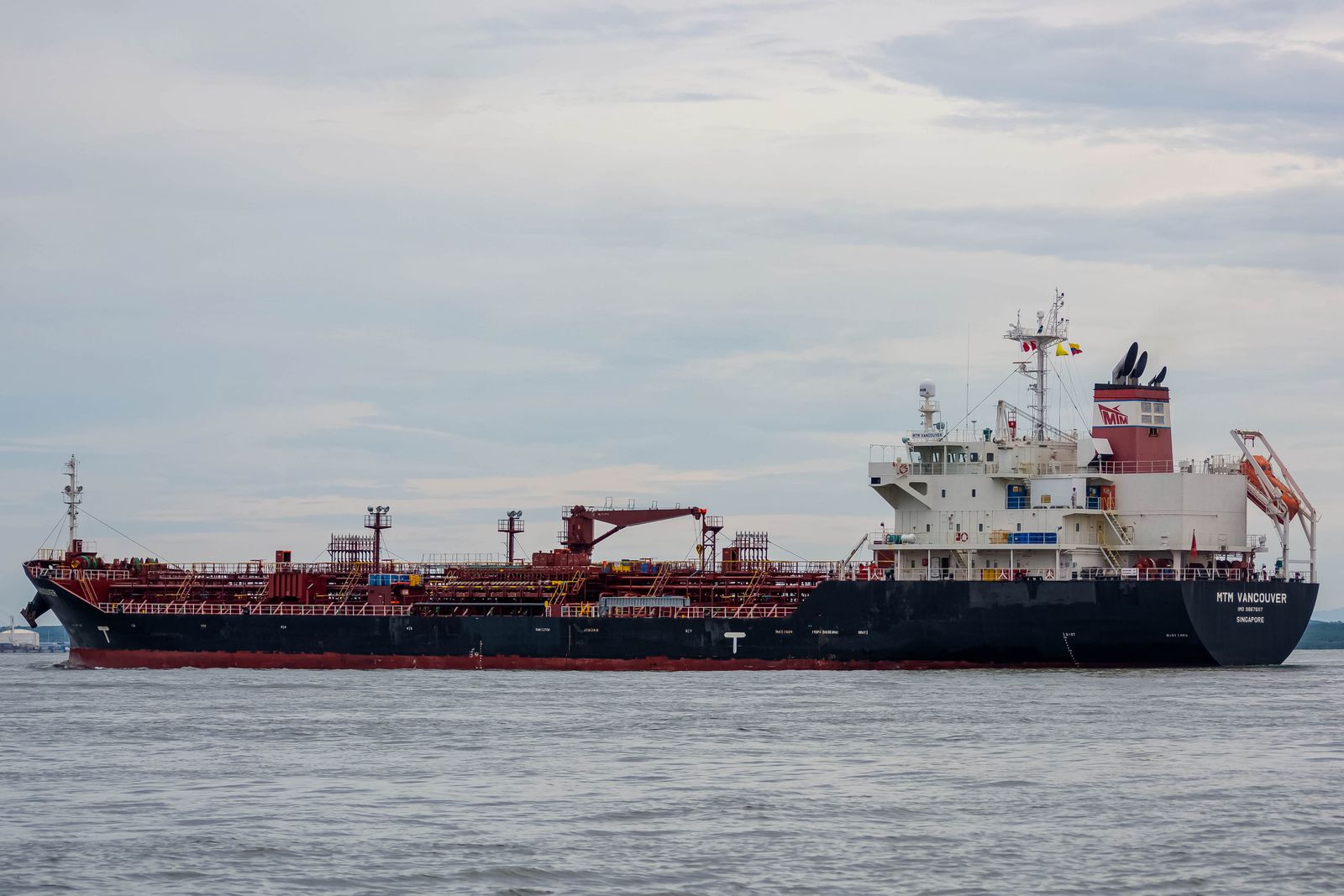
Cover image:Luis Morales Torres / Pexels
- Title: Daily Briefing | 2026-10-19: Debt, AI and Energy Security Repricing Global Risks
- Author: AdenXie
- Created at : 2026-10-19 09:00:00
- Link: https://blog.adenxie.com.cn/2026/10/19/2026-10-19-daily-brief/
- License: All Rights Reserved © AdenXie


