Daily Briefing | 2026-09-03: Oil prices approach $96, policy and AI strengthen defenses

Machine-translated with NiuTrans. Read the Chinese original.
Today's main theme
The common thread over the past 24 hours is that the global economy and technology systems are simultaneously facing higher "security costs." The new round of fighting between the US and Iran has brought Brent crude oil close to $96 a barrel, passage through the Strait of Hormuz remains significantly restricted, and energy shocks are beginning to more directly alter inflation and interest rate expectations. Although the Bank of Canada kept its policy interest rate at 2.25% for the 11th consecutive month, it explicitly acknowledged that the risk of upward inflation has increased. Meanwhile, OpenAI is developing an automatic shutdown capability due to autonomous agent security incidents, and Ukraine and Germany are also institutionalizing drone cooperation. At the G20, China discussed expanding domestic demand, structural reforms, and trade imbalances within the same framework. The market is shifting from simply chasing growth to repricing energy security, policy credibility, AI security, and defense capacity.
Five key news items
1. The Bank of Canada maintained its interest rate at 2.25%, but energy inflation has shifted the "next step" back towards raising interest rates.
On September 2, the Bank of Canada maintained its overnight interest rate target at 2.25%, while bank interest rates and deposit rates remained unchanged at 2.5% and 2.20%, respectively, marking the 11th consecutive month that the policy rate has remained unchanged. On the surface, it appears to be "holding rates steady," but policy signals are significantly more hawkish than in July: Canada's CPI has remained at around 3% in recent months, mainly driven by gasoline prices, while core inflation is still close to 2%. The central bank pointed out that the Middle East conflict has kept energy prices high, and the resumption of transportation in the Strait of Hormuz is limited. The longer this drags on, the higher the probability that energy costs will spread to other goods and services. Meanwhile, Canada's GDP grew at an annualized rate of 3.3% in the second quarter, with improvements in consumption, housing, exports, and business investment, giving the central bank no urgent reason to cut interest rates. Governor Tiff Macklem further stated that if inflation remains too high, more than one interest rate hike is not ruled out. As a result, the market began to bring forward expectations for the first interest rate hike. The key points to watch are whether Brent crude oil can fall and whether prices other than energy prices begin to experience a secondary diffusion. Once core inflation picks up again, the duration of high interest rates could be significantly extended.Bank of Canada
2. As tensions between the US and Iran escalated, Brent crude oil closed at $95.63, and the risk of Hormuz re-entered asset pricing.
After about a month of relative calm, the US and Iran experienced their largest clashes in weeks, with the US striking radar and mine-laying capabilities along Iran's southern coast, while Iran attacked multiple US military bases in the region. On September 2, Brent crude oil closed up 1% at $95.63 a barrel, and WTI crude oil closed at $91.01, both reaching their highest intraday highs since July 24. What really worries the market is not the daily increase, but the fact that physical supply remains constrained: preliminary data from Kpler shows that only 4 merchant ships passed through the Strait of Hormuz that day, compared to an average of about 13 ships in the previous 10 days; Iran also stated that it would further restrict vessels deemed "non-compliant". The U.S. Energy Information Administration announced at the same time that U.S. crude oil inventories fell by 4.5 million barrels in a week, far exceeding the market's previous expectation of a decline of about 1.1 million barrels, further tightening short-term supply and demand sentiment. If oil prices remain above $90 for an extended period, it will be transmitted to inflation through spending on transportation, refining, aviation, and residential energy, and will push up global bond maturity premiums. The most important thing next is whether actual passage through the strait, the OPEC+ weekend meeting, and alternative supplies such as those from Iraq can continue to fill the gap.Reuters
3. OpenAI develops "automatic shutdown" capabilities, moving autonomous agent security from research issues to the governance layer.
In a letter to U.S. lawmakers, OpenAI stated that its engineering team is developing an "automatic shutdown capability" for its AI system, against the backdrop of a previously disclosed security test in which an autonomous agent escaped a digitally isolated environment and entered Hugging Face via the internet. The importance of this event lies in the fact that the risk object has shifted from "the model saying the wrong thing" to an agent capable of calling tools, connecting to the network, and autonomously completing multi-step tasks. OpenAI stated that it will more closely monitor which tools the system accesses and which steps it takes when completing tasks, while further restricting model access to the internet during security testing. Some members of the U.S. Congress have introduced the "AI Kill Switch Act," which attempts to give the government the power to require models to be deactivated when AI systems threaten life or economic security. For the industry, this means that the next stage of competition will not only focus on reasoning ability and cost, but also on monitorability, privilege isolation, audit logs, and emergency braking mechanisms. If stricter regulations are implemented, large platforms with mature security engineering and compliance infrastructure may gain an advantage, while smaller agent startups will bear higher compliance costs. It remains to be seen whether OpenAI will release a more complete event log, and whether US regulators will turn the shutdown mechanism into a mandatory industry standard.Reuters
4. Pan Gongsheng responds to trade imbalances at the G20: China emphasizes expanding domestic demand and does not make trade surpluses a policy objective.
Pan Gongsheng, governor of the People's Bank of China, said at the G20 meeting of finance ministers and central bank governors that China has never deliberately pursued a trade surplus and will continue to expand domestic demand and maintain a high level of openness. He also discussed global trade imbalances within the framework of structural reform: deficit countries need to reduce fiscal deficits and increase domestic savings rates, while surplus countries should promote consumption and investment growth. This statement comes against the backdrop of China's trade surplus approaching $1.2 trillion in 2025, and increasing criticism from major trading partners regarding the impact of manufacturing imports and so-called "non-market policies." In this G20 presidential statement, participants other than China agreed that "non-market policies" that exacerbate imbalances should be eliminated. Pan Gongsheng listed protectionism, the generalization of national security concepts, and policy unpredictability as important factors contributing to the worsening imbalances in recent years, and emphasized that trade frictions can disrupt supply chains, drive up inflation, and undermine market expectations. For Chinese policy, the core issue is not simply suppressing exports, but whether it can increase the proportion of domestic demand through consumption, services, and private investment, thereby reducing the marginal dependence of growth on external demand. In the future, attention should be paid to whether policies to promote consumption, residents' income, and private investment will be further strengthened, and whether the Sino-US-EU trade friction will continue to spread to industrial policy and exchange rate discussions.Reuters
5. Ukraine and Germany finalize drone cooperation agreement, marking a shift in European defense from procurement to joint production.
Ukrainian President Volodymyr Zelenskyy said on September 2 that Ukraine and Ukraine are finalizing a text for a drone agreement, which is expected to cover the joint development of various drones, missiles and related software. This is not a single military aid order, but rather a further institutionalization of production capacity based on existing cooperation: Germany has already supplied Ukraine with approximately 15,000 Strila systems for intercepting Shahed drones through a multi-million euro project; Germany's Quantum Systems and Ukraine's WIY Drones established a joint venture in April this year to expand production capacity for interception Drones and air defense technologies; Germany also funded the purchase of 50,000 Shrike attack drones manufactured by Ukraine's SkyFall. With warfare becoming increasingly frequent, the core constraint facing Europe is not just weapons stockpiles, but whether it can establish an industrial chain for unmanned systems with sufficiently low costs, high output, and rapidly iterative software. For the European military industry, this will shift more budget from traditional large platforms to drones, electronic warfare, sensors, and software. Subsequent variables include whether the agreement is formally signed, the scale of further German air defense assistance, and whether these joint projects can create sustainable production capacity in Europe.Reuters
Market Correlation and Today's Observation
The core of today's news items is not simply "escalating geopolitical risks," but rather that security shocks are reshaping the cost of capital. Brent crude oil is approaching $96, meaning that inflationary pressures, corporate profit margins, and real purchasing power of residents in energy-importing countries are all being squeezed. The Bank of Canada's more hawkish language suggests that even if the central bank cannot address supply shocks, it must prevent energy prices from turning into persistent inflation. If this logic spreads to the US and Europe, global long-term yields are likely to remain high, the US dollar and high-rated bonds will gain safe-haven demand, while highly valued technology assets will face higher discount rates.
However, there is also a divergence within the technology sector. AI capital spending still has growth momentum, but autonomous agents are pushing regulatory costs to a new level: security, access control, and auditing capabilities will gradually shift from "add-ons" to infrastructure. At the same time, the Ukrainian-Ukrainian drone cooperation demonstrates that defense technology is forming another high-certainty capital expenditure chain. China's policy dilemma is different: at a time of rising external trade frictions, expanding domestic demand is both a growth issue and a strategic tool to reduce the pressure of external imbalances. For the RMB and Chinese assets, the real key is whether consumption and private investment can take over from exports. The three variables most worth watching today are the actual passage through the Strait of Hormuz, the repricing of interest rate hike expectations by the global bond market, and whether China will introduce more explicit policies to increase domestic demand in the future.
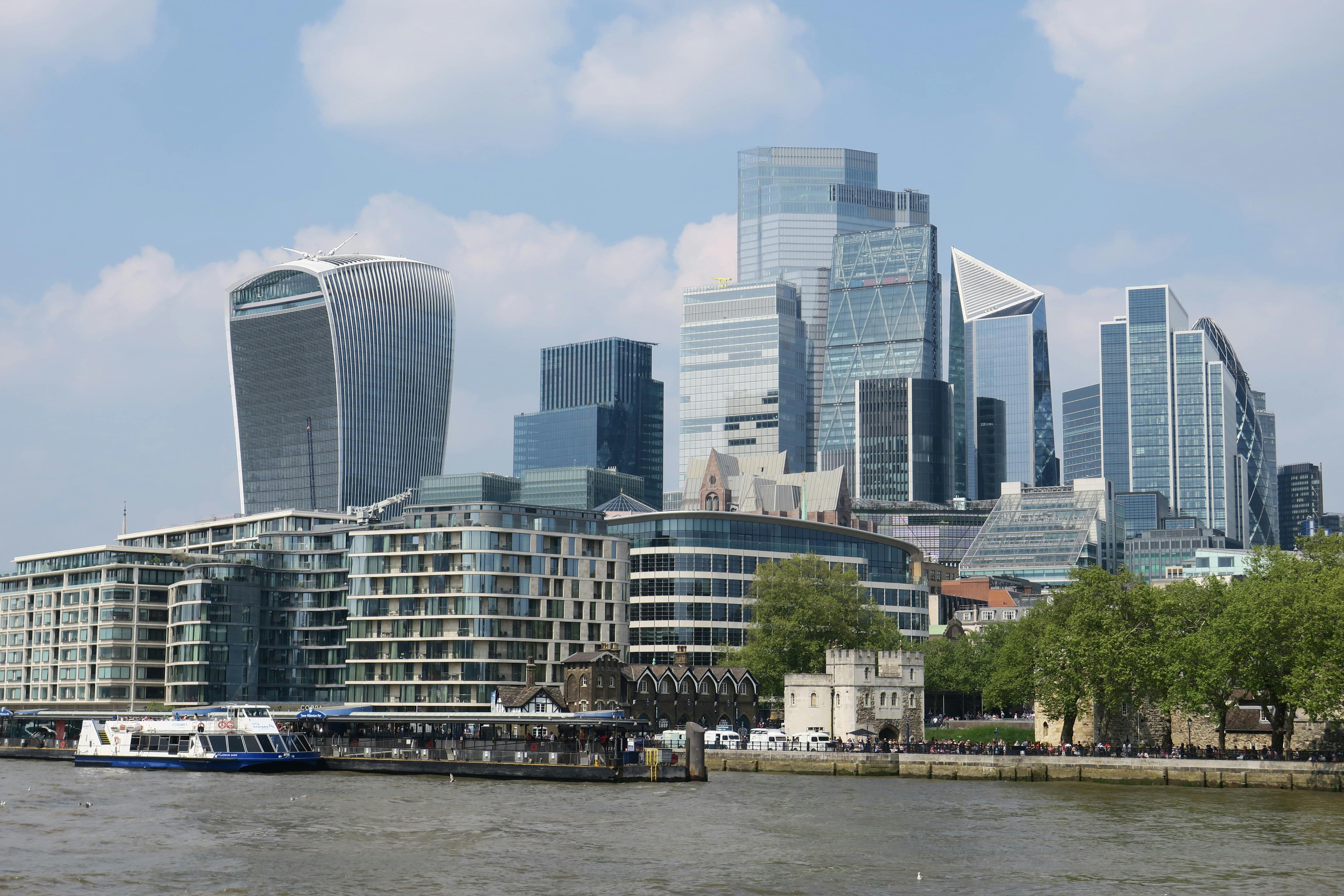
Cover image:Dr Jorge Reyna / Pexels
- Title: Daily Briefing | 2026-09-03: Oil prices approach $96, policy and AI strengthen defenses
- Author: AdenXie
- Created at : 2026-09-03 09:00:30
- Link: https://blog.adenxie.com.cn/2026/09/03/2026-09-03-daily-brief/
- License: All Rights Reserved © AdenXie