Xiaomi 13 Ultra Half-Year Usage Report - Xiaomi 13 Ultra Demystification

Machine-translated with NiuTrans. Read the Chinese original.
This article is a six-month usage report of Xiaomi's 2023 imaging flagship. It is an original work by Aden and may not be reproduced without permission.
In early 2024, when the Xiaomi 14 Ultra was released, I bought a reduced-price Xiaomi annual imaging flagship at an extremely low price. This phone was once rated as having the strongest imaging capabilities in 2023, and it is also Xiaomi's second Ultra camera after its collaboration with Leica.
This picture clearly shows the exaggerated image quality of this phone. Some people say that this phone is not a qualified phone, but more like a camera.
I. Appearance
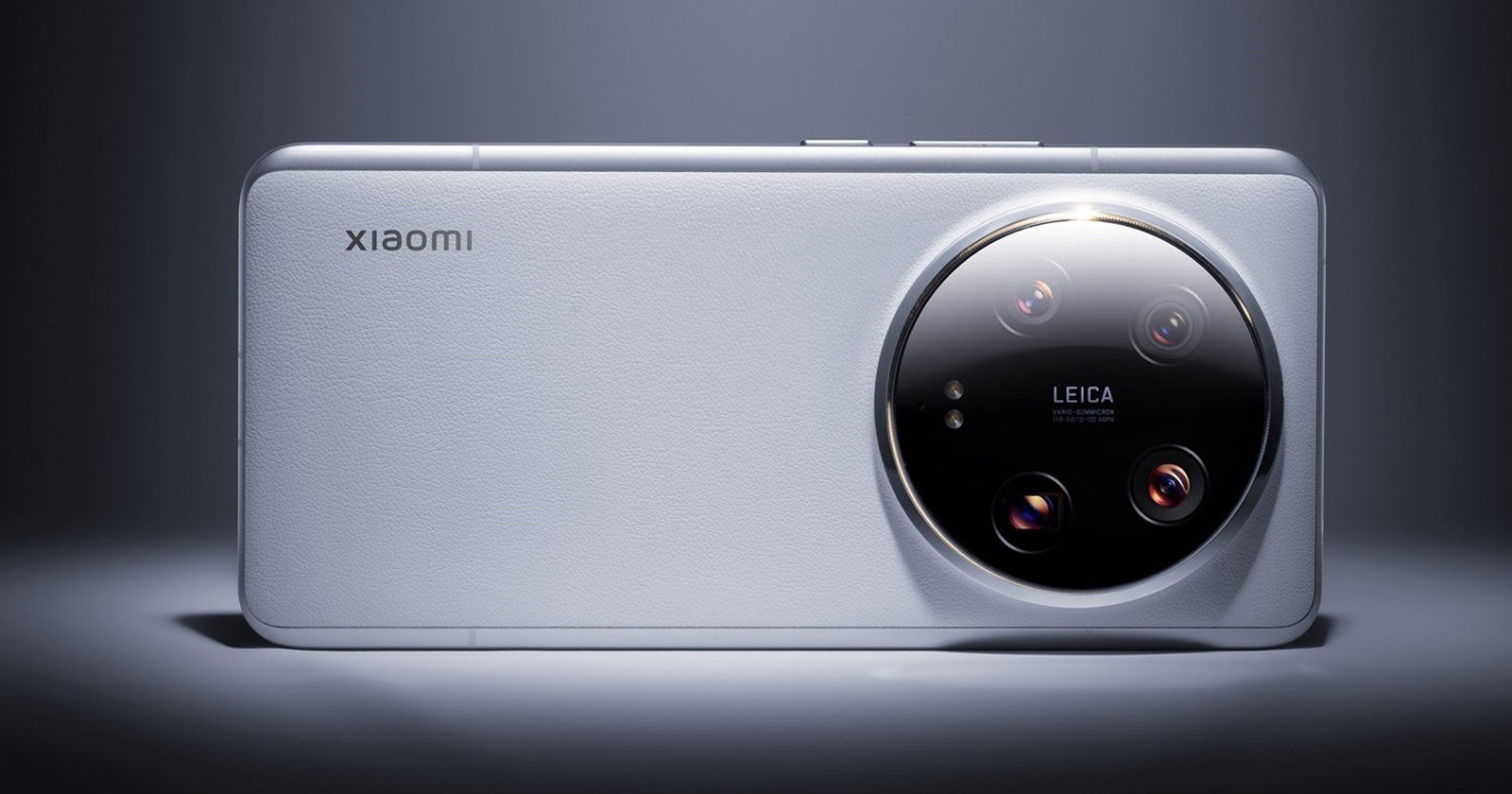
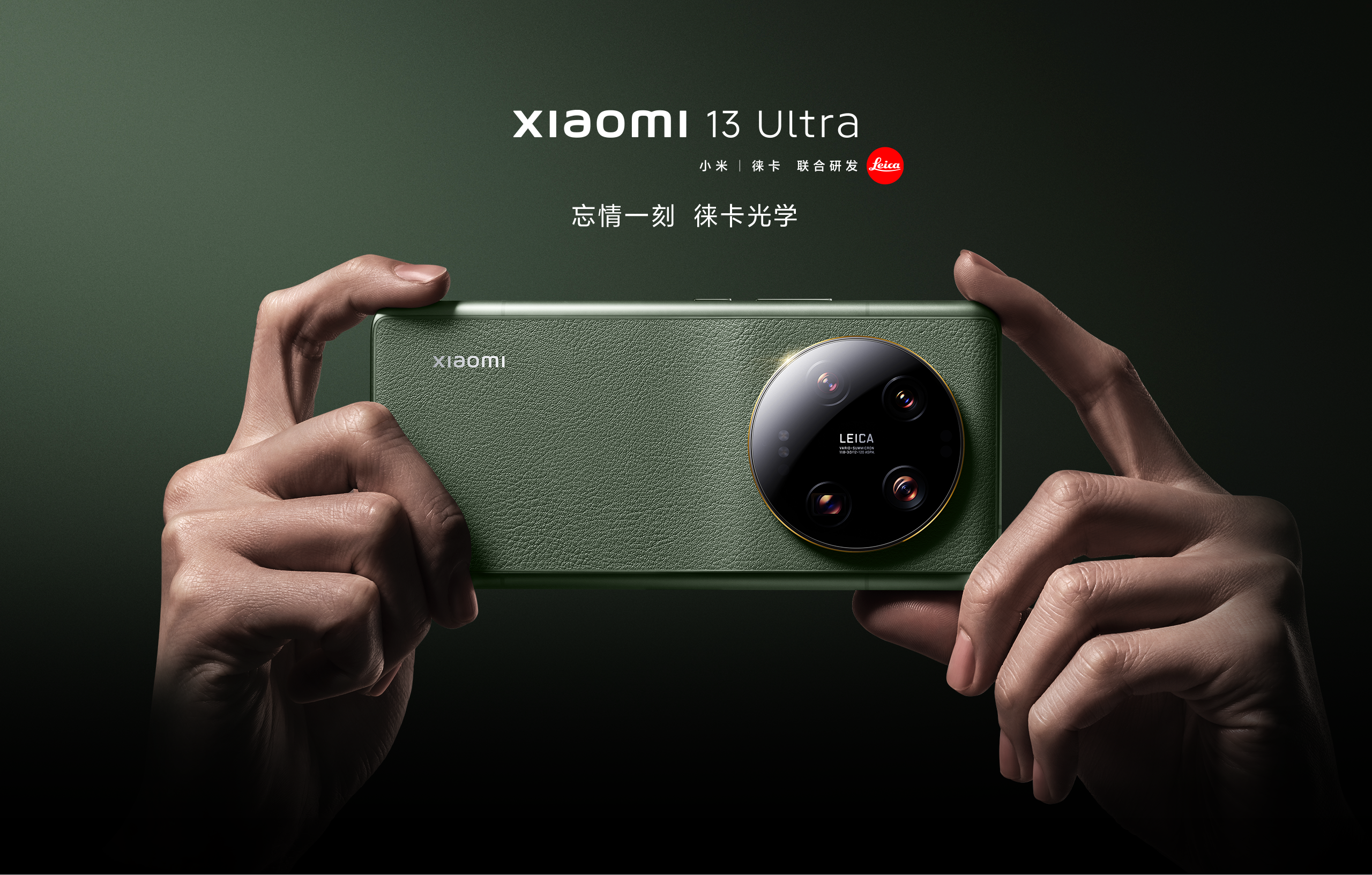
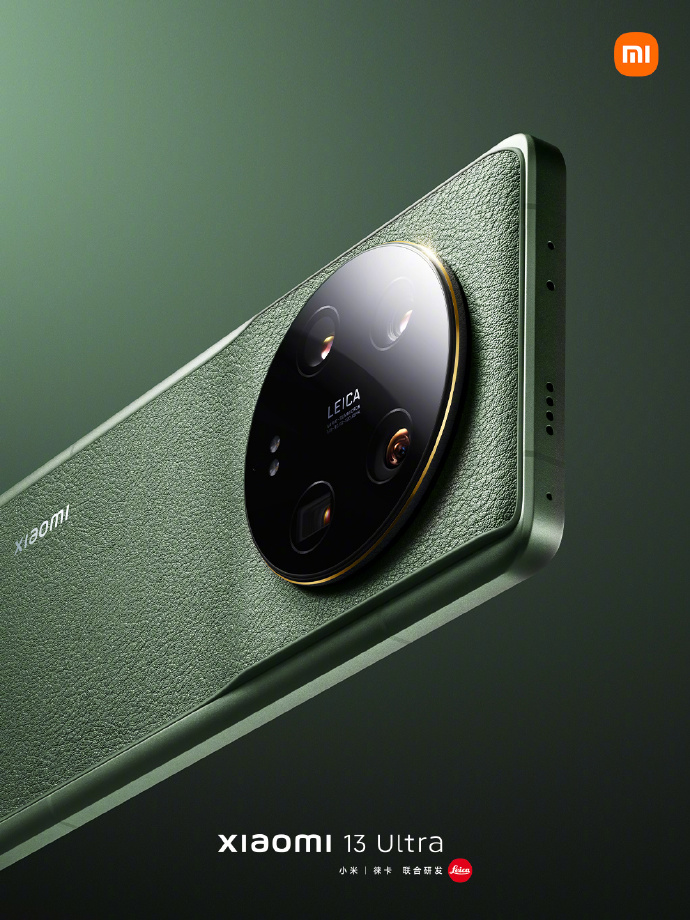
The most impressive aspect of this phone's appearance is undoubtedly its fastback design. My impression after using this phone is that "it succeeds and fails." Why do I say that? Because without this sloping back, this phone probably wouldn't be able to fit four large-sensor optical lenses. The reason it's a sloping back is because this sloping back gives the phone a very poor grip. I usually use this phone with my index finger pressed against the lens, otherwise the phone would flip over due to headaches.
Besides the fastback, what makes this 13 Ultra different from ordinary phones is that its back panel adopts a padded design, which means that vegetable leather is filled in the middle frame, which is a unique design language. This design was carried over to the 14Ultra. One advantage of this design approach is that the middle frame can be made very solid. During my daily bare-bones use, I could clearly feel that the mid-frame was integrated with the entire phone, giving it a very rugged feel.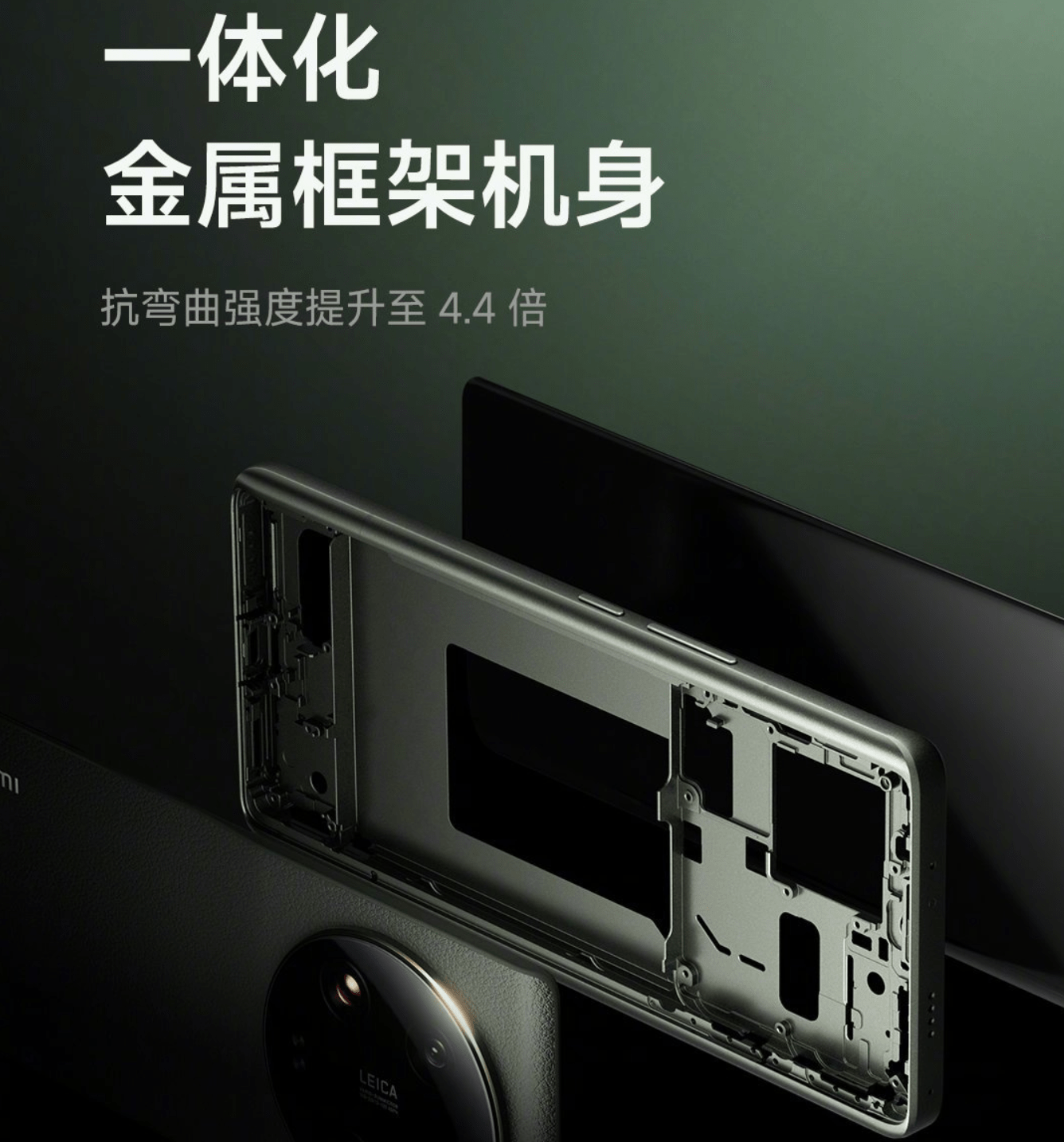
II. Image Section
As a flagship imaging device, the focus of this phone should be on imaging.
First, let's talk about the main
The main camera is an IMX989 from Sony. This CMOS chip originally appeared on the Xiaomi 12 Sultra and was jointly developed by Xiaomi and Sony. Xiaomi monopolized the market for six months before Sony allowed other mobile phone manufacturers to use it.
This CMOS chip is 1 inch in size, and theoretically it can perform very well in low-light environments. But in actual use, I can only say that a perfectly good 1-inch screen was ruined by Xiaomi's terrible night view algorithm. In areas with many light signs, 13Ultra won't apply highlighter; the light signs will directly expose you to white. Then, when encountering warm or white light, there's a chance the white balance will drift, resulting in photos that are stark white with a hint of gray.

I used the default mode when taking this picture; I didn't apply a lens film, and the lens was wiped clean. It is said that the Xiaomi 14 Ultra has improved coating, which should have a better effect than the 13 Ultra.
The 13Ultra's night scene algorithm scheduling is very passive. The default mode is straight out with virtually no algorithm intervention. Only when the night scene mode is on can you clearly feel the traces of HDR algorithm processing (although it doesn't spin around). I think Xiaomi's strategy is very bad. Blindly pursuing film production speed will only lead to making a lot of bad films.

During use, I also discovered another problem: Xiaomi (which could also be a problem with Leica toning) has a noticeable overflow when shooting red, and the trigger rate is 100%, which is not an accident. This may be due to algorithm bias, as red was not specifically optimized.
Having discussed the disadvantages, are there any advantages? The answer is definitely there.
Since collaborating with Leica, Xiaomi has been praising its shades. Actually, I think Xiaomi's tone control is quite successful. Leica Classic, Leica Vibrant, and Leica Monochrome HC are sufficient to handle various scenes. Since I started using this phone, my friends have all called me a "landscape photography master".

And the main camera uses a variable aperture. Although there are only two settings, F/1.9 and F/4, F/4 is enough to prevent me from having blurry edges when shooting text. However, there is very little "variable aperture" involved in the photography process; most scenes are shot at F/1.9 (ps: This variable aperture alone makes many beginners mistakenly think the lens is cracked).
Then there is the medium coke.
There's not much to say about the medium focal length lens; it's the best 3x lens I've ever used, and the 75mm gold focal length takes great photos.
However, it should be noted that the 3.2x lens of the Xiaomi 13 Ultra is actually cropped to 68mm (2.6x). If you want to use the entire lens, you need to manually pull it back to 68mm.
The only drawback is that it doesn't provide a floating lens module (macro). I don't quite understand why the 13Pro is equipped with a telephoto macro lens, but the Ultra lens is simplified.
Finally, the telephoto lens
The telephoto lens is a 5x 858 lens, with viewing parameters of 1/2.51 inches and an aperture of F3.0. In actual testing, the telephoto capability is actually similar to, or even inferior to, the IMX586 on the Xiaomi 10 Supreme Commemorative Edition, Xiaomi 11 Ultra, and Xiaomi 12 Sultra. After searching online, I discovered that the IMX858 is 2x2OCL, which is not naturally suitable for long-distance viewing, and its quality is definitely not as good as the IMX586.
However, during use, I found that its color accuracy was better than that of its predecessor (12SUltra), which can be considered an improvement.
In the May update, Xiaomi provided the 13Ultra with the same AI super telephoto lens as the 14Ultra via OTA, which is essentially using a large AI model to draw more details. In actual use, the telephoto ability has indeed been improved, but the effect is still not as good as the 14Ultra. My opinion is that it's good enough to have it, and it's already good enough that you can't remember to give it to me. Haven't you heard that outdated flagships and dogs are not allowed inside?
portrait
Portraits are arguably one of the worst parts of your life. What I want to say is that the rear camera is bad, not the front camera. Xiaomi's front-facing portrait algorithm is currently in the first tier and has gained recognition from many women around me. Previously, rear-facing portraits were always Leica-toned, focusing on making people look sallow, and the edge blurring was also poorly handled.
At the end of May, with the update of the AI super telephoto lens, the latest Master Portrait was also released to the Xiaomi 13 Ultra. However, after comparison, I found that it was probably only a filter released to the 13 Ultra. The photography page still has a terrible lens package design (the default 75mm cannot switch lenses, and switching lenses requires using the soft focus, rotating focus, Portrait and other terrible effects in the lens package), so it can be said that there has been no improvement. The main camera interface doesn't have a switch button for the fast EV (it's really incredible that the Turbo3 gives you rice but doesn't upzoom), the professional mode isn't preset, and the continuous zoom for video recording is still being held back.
In summary, it boils down to one sentence: outdated flagships are not as good as dogs. Besides, the 13Ultra isn't outdated at all. The official price was adjusted to 1400 on July 11th, and now you can buy the 12+256 for 3999. If you treat old machines like this, who will buy them in the future?
Therefore, compared to the 14 Ultra, Turbo3, and Civi4 Pro, the Xiaomi 13 Ultra currently lacks professional mode shade preset, continuous video zoom, EV quick adjustment, and a new portrait UI (focal length adjustment). In fact, these are all software-level things. If there are strong developers, they can even port them over, but Mi just won't release them. This does not include things like 4K120, which may be hardware-related. As a developer user, spending most of my time on couplets for three consecutive months is really unbearable.
III. Surrounding Configuration
There's not much to say about the peripheral configurations of Xiaomi's devices; they basically have everything you need, and none of them are too bad.
For example, charging is 90W wired and 50W wireless, and a 5000mAh battery is basically standard (just to complain, why does your Mi 5000's battery have such poor battery life? It only lasts 4-5 hours on 4G).
Infrared remote control, IP68, dual speakers, and USB 3.2 will also be included.
Speaking of the screen, I personally think the quality of this C7 screen from CSOT is quite good, and the eye protection is quite good, but the power consumption is a bit high. I feel like I've never reached the advertised peak speed of 2600 nits; I still can't see the screen clearly outdoors.
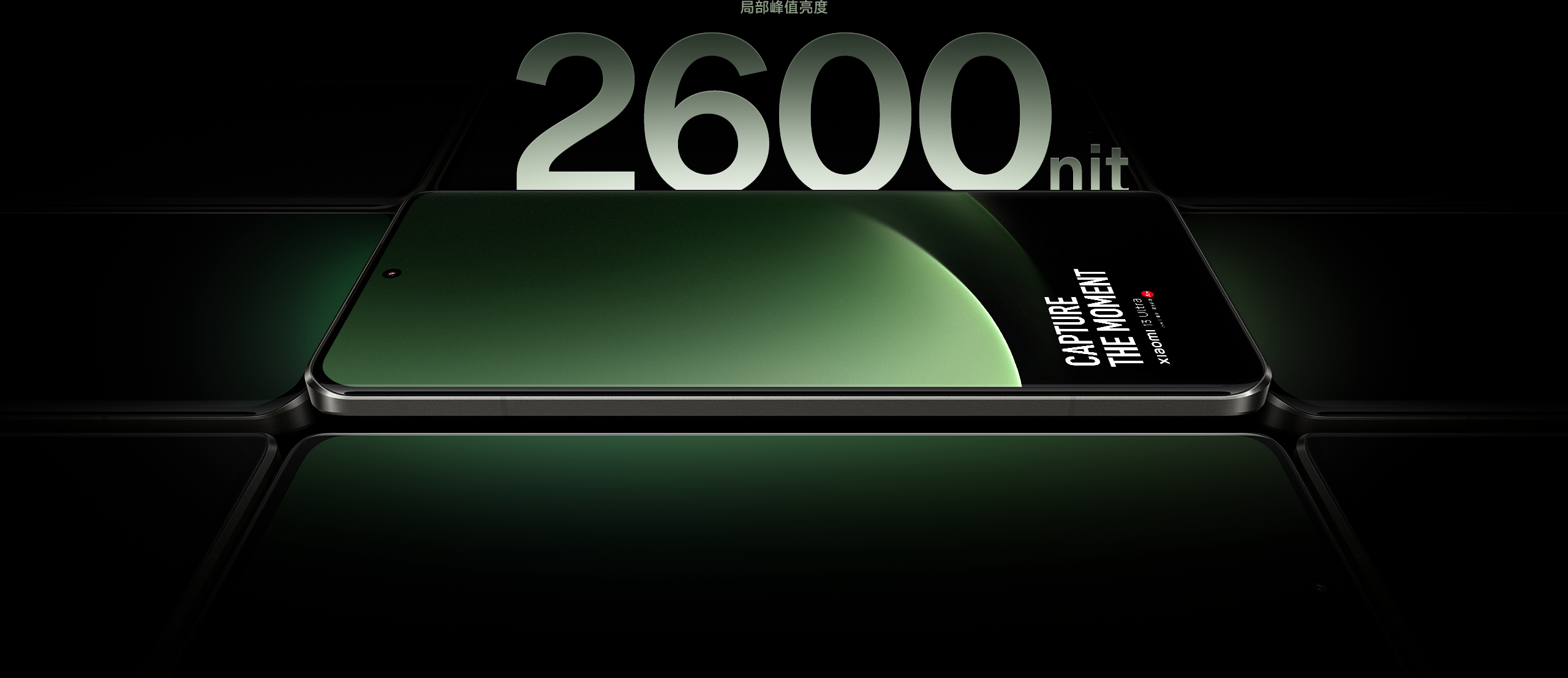
One downside of this phone is that it gets very hot easily, and the brightness drops when it gets hot. The abnormal body temperature is also not easy to dissipate, and it all accumulates on the index finger supporting the phone under the lens, which is not a good experience on hot days.
Whether it's 4G/5G or WiFi signals, I think they can be considered top-tier, comparable to Huawei's. The Wi-Fi is quite fast, but downloads are frequently congested, causing my Huawei's internet speed to be very poor.
system
Xiaomi released its self-developed system, Xiaomi HyperOS, also known as Surge OS, along with the Xiaomi 14 last November. Before MIUI 12, many people said that Xiaomi's system had many bugs. I didn't believe it at the time and after getting Xiaomi, I found it to be really good. Xiaomi's operating system is currently the most convenient for me to use. Its small functions and UI design are very user-friendly and efficient. Speaking of bugs, I didn't encounter many. Maybe I'm not very sensitive to lag, but it was okay, except for the occasional slight frame drop. Adding your favorite features to MIUI and Surge after rooting will make it easier to use. Before I sold my Xiaomi 13 Ultra, it was the development version 1.0.24.7.8.DEV. Overall, compared to the first version, all the bugs have been fixed, the overall scheduling and overheating have also decreased a lot, and the system is generally smoother (of course, there is still a gap compared to the current T0). Never give up on a good phone just because you hear the system is bad. Everyone was hyping vivo's OriginOS 4, but after my recommendation, a friend bought the X100 Pro, and after experiencing it, I felt it was just so-so.Whether the system is good or not, you have to use it yourself to know.。
sum up
Overall, the Xiaomi 13 Ultra is not a decent phone. Its distorted design, poor heat dissipation, and overheating provide a user experience that is inferior to its own Xiaomi 13, or even performance phones like the K60 and K70. However, his photography is indeed remarkable. Before the Xiaomi 14 Ultra came out, it was indeed the most well-rounded camera overall. There's a saying that goes: there's no such thing as an unsuitable machine, only an unsuitable price. Now the price of a used 13 Ultra has dropped below 3000, and you can buy a brand new 12+256 for 3999. If you have a limited budget but want to buy a phone with decent photography, the 13Ultra is definitely your best choice.
- Title: Xiaomi 13 Ultra Half-Year Usage Report - Xiaomi 13 Ultra Demystification
- Author: AdenXie
- Created at : 2024-07-16 08:41:58
- Updated at : 2024-07-16 10:42:01
- Link: https://blog.adenxie.com.cn/2024/07/16/Xiaomi 13 Ultra Semi-Annual Usage Report/
- License: All Rights Reserved © AdenXie